Preparing for Awaab's Law Phase 2
The Hazards in Social Housing (Prescribed Requirements) (England) Regulations 2025, also known as Awaab's Law, introduces statutory timeframes for social landlords to investigate, communicate, and address significant and emergency hazards in tenants' homes. While landlords have always had a legal duty to keep homes safe, Awaab's Law establishes clear requirements for response times when serious hazards are identified. The legislation applies to registered providers of social housing in England, including local authorities and private registered providers.
Phase 1 came into force on 27th October 2025, applying fixed timeframes to address damp and mould hazards that present a significant risk of harm, as well as all emergency hazards.
From 30th November 2026, Phase 2 extends these requirements to a wider range of HHSRS hazards, including excess cold, excess heat, falls, structural collapse, fire and explosions, electrical hazards, and domestic hygiene.
Pennington Choices Podcasts
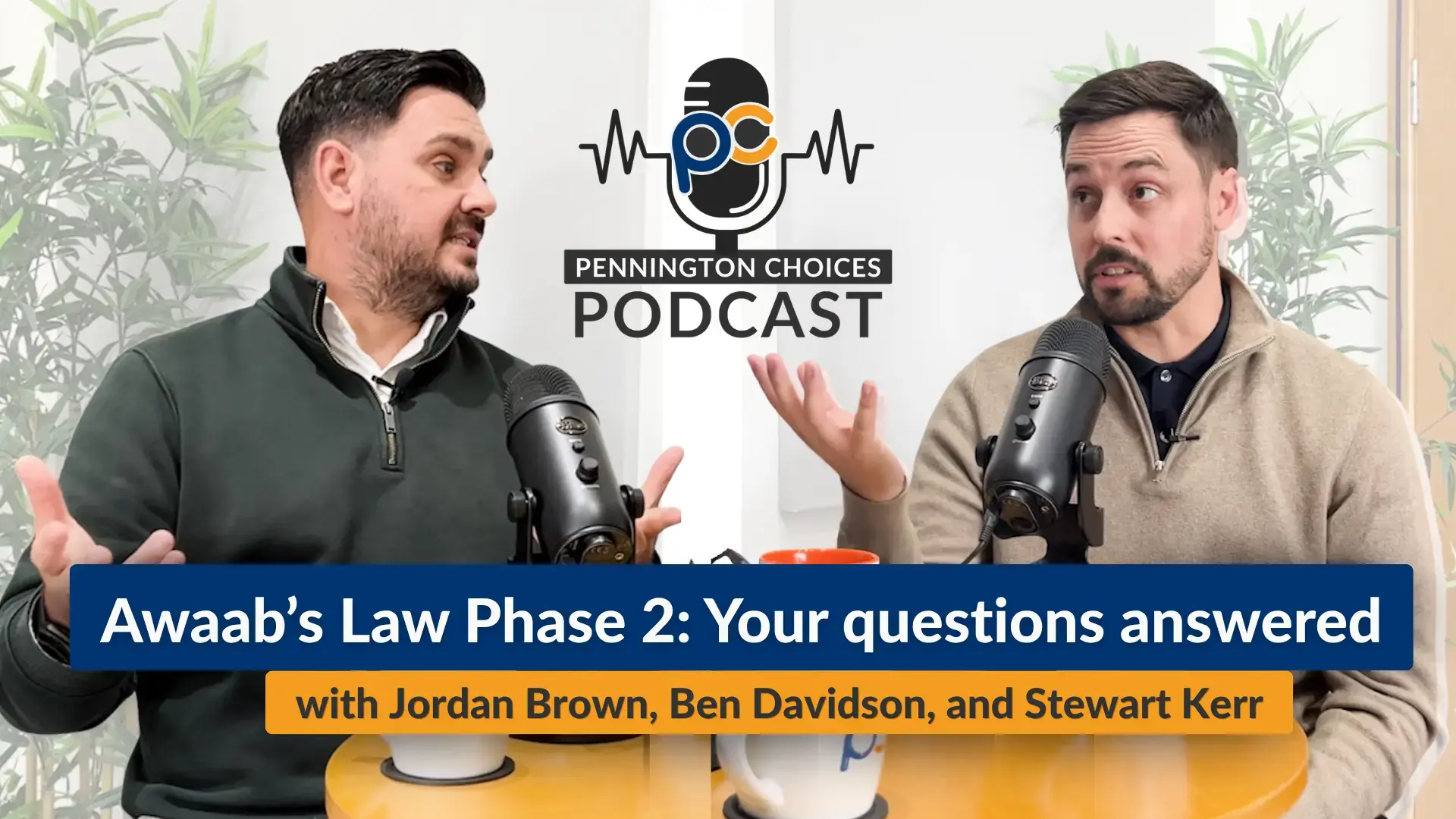
Awaab’s Law Phase 2: Your questions answered
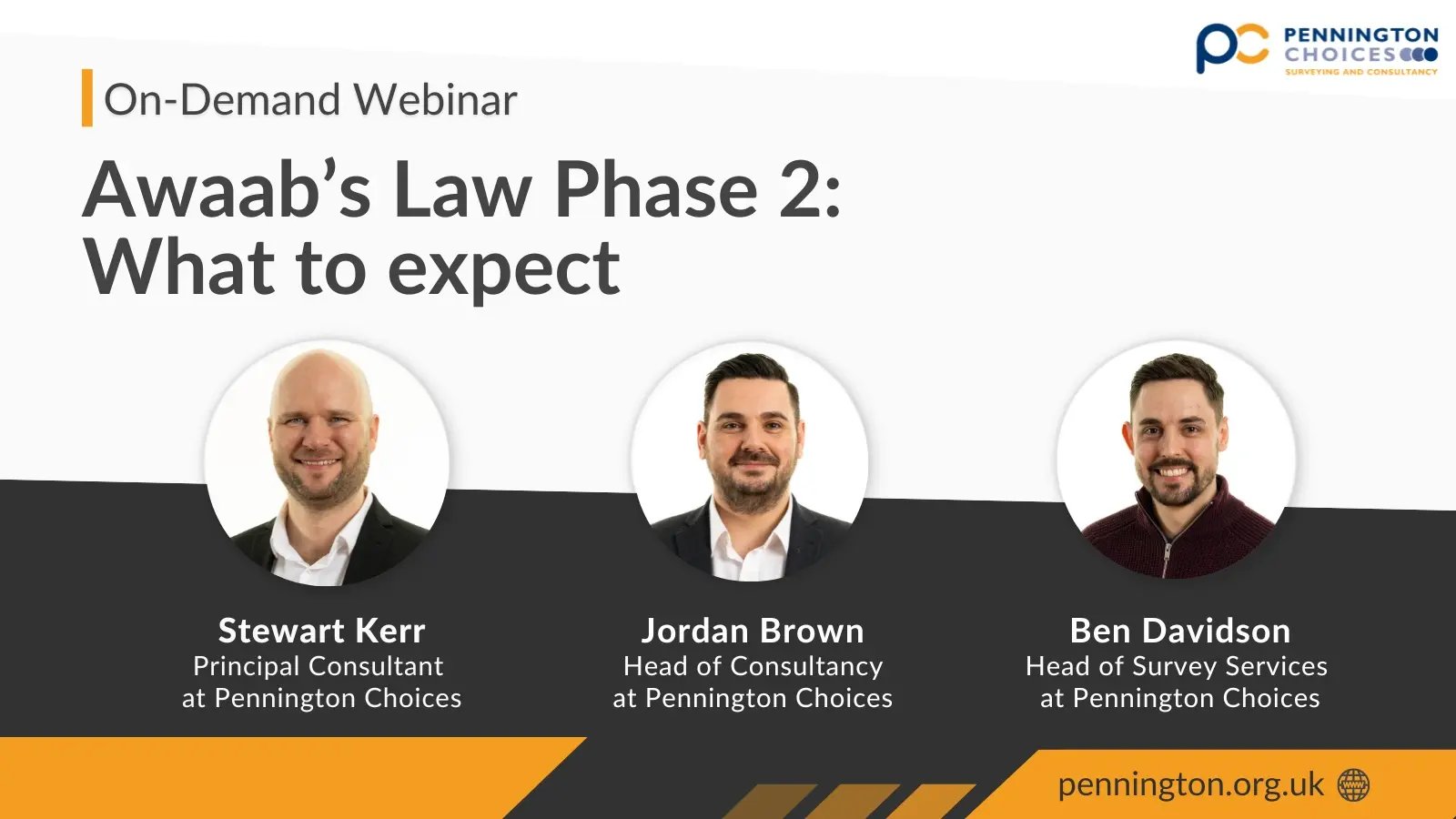
Following the influx of questions we received during our recent webinar, ‘Awaab’s Law Phase 2: What to expect’, Jordan Brown, Head of Consultancy, Ben Davidson, Head of Survey Services, and Stewart Kerr, Principal Consultant, have compiled and answered the remaining questions from the session.
Awaab’s Law: Your Questions Answered
Jordan Brown, Head of Consultancy, and Andrew Best, Account Manager, sat down to answer your questions from our recent ‘Awaab’s Law: 6 Months On’ webinar. Tune in to hear the expert answers to your questions, including how organisations are preparing for the next phases of Awaab’s Law, devising resources seasonally to prepare for the colder months, and the key risks observed so far in meeting the timeframes.
Awaab's Law: 6 Months On
Jordan Brown, Head of Consultancy, and Jack Ashton, Principal Consultant, discuss how good organisations have adapted to phase 1 of Awaab’s Law, best practices for preparing now for phase 2 coming into force later this year, and the benefits of treating this as a fundamental shift in how your organisation approaches damp and mould.
A Conversation with Pennington Choices #1: Awaab’s Law, Building Safety, and More
In this podcast episode, Professional Services Director, Sarah Davies, Head of Consultancy, Jordan Brown, and Head of Knowledge and Insight, Letrice Thomas, break down the latest developments shaping the social housing sector today. From Awaab’s Law Phase 2 and the Building Safety (Wales) Act to the Competence and Conduct Standard and the Regulator of Social Housing’s latest Regulatory Casework Review, they explore what these changes mean for housing providers and why demonstrating compliance, maintaining accurate asset data, and preparing early are essential.
On-Demand Webinars
Awaab's Law: 6 Months On
eBooks - Guides, Checklists, Self-Assessments, and Reports
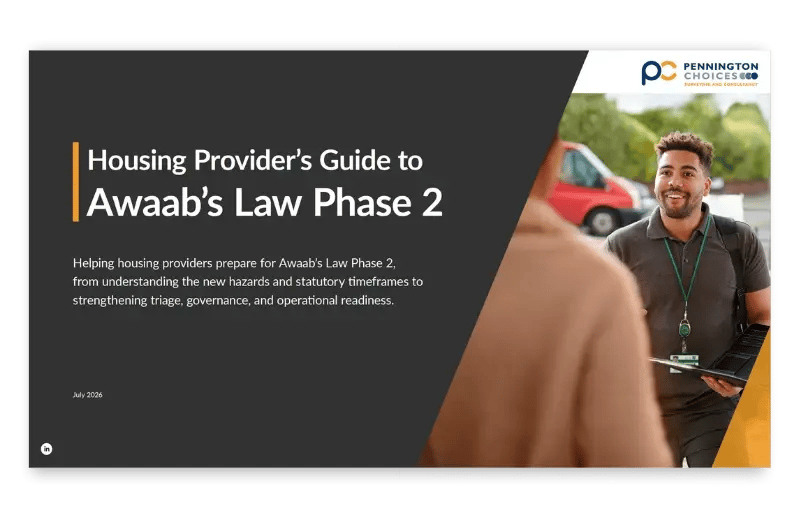
Download - Housing Providers Guide to Awaab's Law Phase 2
Prepare for Awaab’s Law Phase 2 by downloading our guide, which outlines new housing safety requirements and essential steps for social landlords.
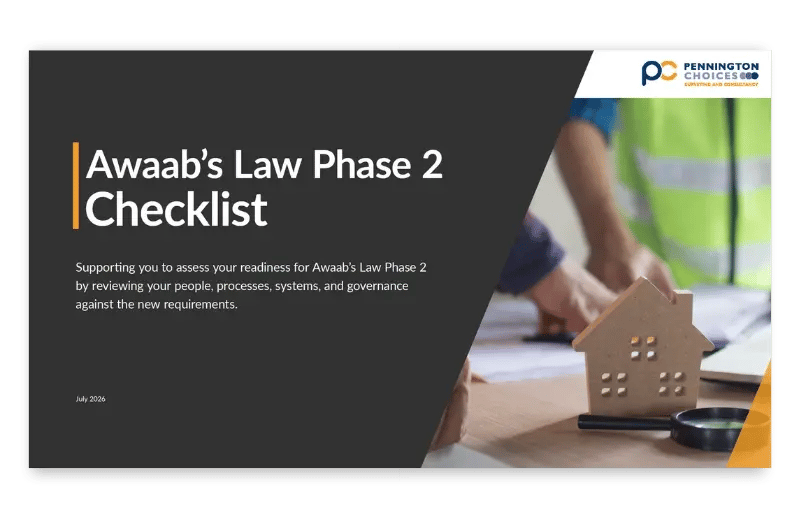
Download nowDownload - Awaab’s Law Phase 2 Checklist
Prepare for Awaab's Law Phase 2 with our readiness checklist covering hazards, tenant engagement, reporting, and staff training.
Download nowDownload - Housing Provider's Guide to Awaab's Law
Download Housing Provider’s Guide to Awaab’s Law to ensure compliance, enhance tenant safety, and understand responsibilities under the new regulations.
Download nowDownload - Report - Managing Damp, Mould, and Condensation Report
Download our survey report to learn how housing providers are adapting to Awaab’s Law and benchmark yourself against others in the sector.
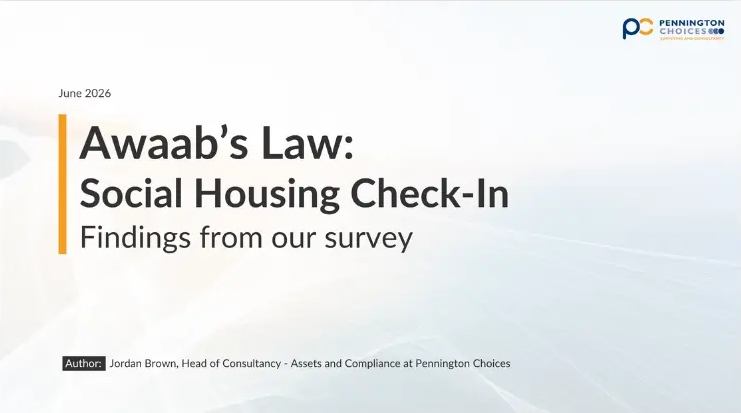
Download nowDownload - Report - Awaab’s Law: Social Housing Check-In Report
Download your free report to see how organisations across the sector are progressing and how Phase 1 lessons can help you prepare for Awaab's Law Phase 2.
Download nowDownload - Damp and Mould Self-Assessment
Download your free damp and mould self-assessment to evaluate and improve your organisation’s approach to addressing damp and mould issues.
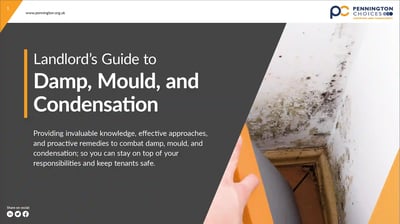
Download nowDownload - Landlord’s Guide to Damp, Mould, and Condensation
Download your FREE Landlord’s guide to addressing damp, mould, and condensation. Keep properties and tenants safe with expert insights.
Download nowBlogs and Case Studies
5 Key Awaab’s Law Timescales Explained
See visual examples of how the Awaab's Law timescales operate in practice, including example standard, renewed, and emergency investigations.
Download nowAwaab's Law Phase 2 Explained
Find out the key updates under the Awaab's Law Phase 2 guidance, including the expanded scope and new requirements for social landlords.
Download nowAwaab's Law Phase 2: More Clarity, More Hazards, and No Hiding Places
Awaab's Law Phase 2 enhances clarity around housing hazards and compliance, guiding landlords in effective repairs and tenant communication.
Download nowAwaab's Law: Your Questions Answered
Explore Awaab's Law Phase 2, its new hazard requirements, and practical insights for housing providers to ensure safety and compliance.
Download nowNo Access and Awaab's Law: Challenges and practical lessons
Discover practical strategies to improve property access, enhance tenant relationships, and ensure compliance with Awaab's Law.
Download now
New Podcast Episode - April 2026
Awaab's Law:
6 Months On
Jordan Brown, Head of Consultancy, and Jack Ashton, Principal Consultant, discuss how good organisations have adapted to Phase 1 of Awaab’s Law, best practices for preparing now for Phase 2 coming into force later this year, and the importance of treating Awaab's Law as a fundamental shift in how your organisation manages hazards.
On-Demand Webinar
Awaab’s Law Phase 2: What to expect
From 30 November, Awaab’s Law Phase 2 will bring new responsibilities for your organisation. In this webinar, our expert panel explains what the changes mean, how to build on the best practice established in Phase 1, and how to prepare for the wider scope of the legislation while addressing the common challenges facing the sector.
Download form title
Frequently Asked Question
Have Question? We are here to help
-
What is Awaab's Law?
Awaab's Law was introduced in memory of two-year-old Awaab Ishak, who died tragically in 2020 as a result of a severe respiratory condition due to prolonged exposure to mould in his home. Awaab’s Law marks a significant shift for social housing providers.
For the first time, there is a clear legal expectation around how quickly landlords must act to address significant or emergency hazards. It is a change that directly affects how we plan, prioritise, and respond to issues like damp, mould, and condensation within the homes we own and manage.
-
Who does Awaab's Law apply to?
Awaab's Law currently only applies to the social rented sector. The guidance addresses registered providers of social housing (social landlords) who are registered with the Regulator of Social Housing. They may be local authorities or private registered providers of social housing (such as housing associations).
-
How do you assess whether a hazard is significant or an emergency?
You must assess whether a hazard is an emergency or significant hazard by evaluating the severity of the risk, the nature of the defect, and the specific, unique circumstances of the household.
-
When must landlords provide tenants with a written summary of findings?
Landlords must provide tenants with a written summary of findings within 3 working days of an investigation concluding.
-
When does Awaab's Law come into effect?
Awaab's Law is being implemented in a phased approach.
Phase 1: 27th October 2025.
Phase 2: 30th November 2026.
Phase 3: Expected during 2027.
-
What are the deadlines for investigating and fixing damp and mould and emergency hazards?
- Investigate potential emergency hazards immediately and if confirmed, complete safety work as soon as reasonably practicable, and always within 24 hours.
- Investigate potential significant hazards within 10 working days.
- Provide written findings to tenants within 3 working days of any investigation concluding.
- Carry out safety work within 5 working days where a significant hazard is identified.
- Begin or take steps to begin supplementary works (to prevent recurrence) within 5 working days, or as soon as reasonably possible and no later than 12 weeks.
- Investigate potential emergency hazards immediately and if confirmed, complete safety work as soon as reasonably practicable, and always within 24 hours.
-
What is Awaab's Law Phase 2?
Awaab's Law Phase 2 takes effect on 30th November 2026, extending the existing requirements and timescales to apply to more HHSRS hazards, including excess cold, excess heat, and electrical hazards.
-
What happens if a social landlord misses an Awaab’s Law deadline?
If a landlord fails to meet an Awaab's Law timeframe, this may be a breach of the tenancy agreement, as the legally required timeframes are implied terms of social housing tenancy agreements.
-
Which HHSRS hazards are included under Awaab’s Law?
Currently, Awaab's Law applies to all emergency hazards and all damp and mould hazards that present a significant risk of harm to tenants.
From 30th November 2026, the law will extend to excess cold, excess heat, falls on the level (including falls on the level, falls on stairs etc., falls between levels), structural collapse, fire and explosions, electrical hazards, and domestic hygiene (including personal hygiene and food safety).
From 2027, the law will extend to the remaining HHSRS hazards, excluding overcrowding.
-
When will Awaab's Law apply to private landlords?
Awaab's Law currently applies to the social housing sector; however, the law will extend to the private sector through the Renters’ Rights Act.
Housing Provider Success Stories
Awaab’s Law Critical Friend Support
Find out how we are supporting Onward Homes in ensuring maintained compliance with Awaab's Law through strategic planning, staff training, and ongoing support.
Read now

Awaab's Law Critical Friend Support
Discover how Home Group partnered with Pennington Choices to navigate Awaab's Law Phase 1 and 2, enhancing safety and compliance in housing practices.
Read More
Damp and Mould Health Check and Awaab’s Law Review
Discover how we supported Arches Housing to ensure compliance with Awaab’s Law Phase 1 by preparing their approach to damp and mould management for the requirements.
Read More
Damp and Mould Health Check
Collaborating with Regenda Homes to enhance their damp and mould management, ensuring safety and compliance for residents through independent assurance.
Read More
How Pennington Choices can help you
Our Awaab's Law solutions help social landlords assess their readiness, strengthen their approach, and build confidence across their organisation.
Drawing on our experience supporting social landlords through Phase 1, we provide practical advice that will help you improve your systems, train frontline staff, strengthen governance, and maintain a consistent approach to hazard management that is in alignment with the requirements of Phases 2 and 3.
We understand that every organisation is at a different stage of its Awaab's Law journey. That's why our support is tailored to your individual needs, whether you require a one-off Health Check, targeted Training, or ongoing Critical Friend Support to ensure you are consistently meeting the requirements as you prepare for the future phases of the legislation.
Let's Talk...
Our Awaab's Law specialists provide clear guidance and practical, tailored support, helping you establish robust policies, validate your data, and ensure your teams are fully trained to effectively navigate and manage the latest requirements.
Consultancy Support
Helping you assess your current readiness, identify gaps, and strengthen your approach to Awaab's Law. We provide comprehensive:
- Health Checks
- Preparedness Reviews
- Stress Testing
- Policies, Procedures, and Process Mapping
- Independent Critical Friend Support
- KPI Development
- Case Reviews
Surveying
Helping you identify hazards, mitigate risks, and understand your properties through a range of specialist surveying services, including:
- Damp, Mould, and Condensation Surveys
- Stock Condition Surveys (HHSRS)
- Fire Safety Surveys
- EPCs
- Section 11 Surveys and Expert Witness Services
Technical Auditing
Providing an independent review of the quality and consistency of your assessment programmes, helping you to identify risks, improve performance, and strengthen governance.
Our Technical Audits cover gas, electric, fire, asbestos, water, damp and mould, and stock condition.
Training
Delivering practical training courses for frontline staff, managers, and technical teams to ensure everyone understands their responsibilities. Our training courses include:
- Awaab's Law Training (for senior leaders (directors and executives), board, cabinet, and portfolio)
- HHSRS Training (including technical, non-technical, and HHSRS 2026 updates courses)
- Disrepair Trainin
- Damp and Mould Management Training
Let's Talk...
Our Awaab's Law specialists provide clear guidance and practical, tailored support, helping you establish robust policies, validate your data, and ensure your teams are fully trained to effectively navigate and manage the latest requirements.
Meet our Experts
Our specialists draw on extensive expertise across housing, regulatory compliance, and surveying to support organisations through each stage of the Awaab's Law implementation.
With over 10 years' experience within the social housing sector, Ben oversees large and complex stock condition and energy performance contacts, helping organisations maintain the accurate stock condition data needed to identify hazards, prioritise investment, and meet Awaab's Law requirements.

Lisa previously worked at the Regulator of Social Housing, where she investigated landlord compliance and helped develop the current regulatory standards. She now uses that experience to help housing providers strengthen their governance, demonstrate assurance, and prepare for Awaab's Law.
Awaab's Law Guidance
Get in touch
Are you unsure of what you need to do to comply with government direction to address risks?
Our team of expert consultants are here to support you through ensuring that your approach to Awaab's Law is robust, ensuring your data is validated, you have policies and procedures in place, and your teams are fully trained.